
 TL;DR:
Crisis management is a crucial part of brand management that prepares businesses for unexpected events that can damage their reputation. Whether it’s a product failure, negative media, or a public scandal, having a crisis management plan ensures quick, coordinated responses.
Key Points:
- What is crisis management? A structured process to handle brand-damaging incidents.
- Why it matters: Protects brand reputation, minimizes losses, and maintains stakeholder trust.
- Types of crises: Operational, financial, reputational, personnel, and technological.
- Essential elements: Risk assessment, defined roles and responsibilities, a crisis communications plan, and post-crisis analysis.
- Real-world examples: Samsung, Tylenol, United Airlines, and Equifax show both successful and failed crisis responses.
Brands that invest in crisis management strategies and crisis communication plans can respond with confidence when a crisis hits, turning potential disasters into opportunities to build trust.
Building a successful brand takes years, but one misstep can threaten everything you’ve worked for. That’s why crisis management is an essential part of brand management. Whether it’s a product recall, public scandal, cybersecurity breach, or social media backlash, every brand is vulnerable to a crisis.
So, what is crisis management in this context? Simply put, it’s how a brand prepares for, responds to, and recovers from unexpected events that threaten its reputation, customer trust, or bottom line.
In this blog, we’ll explore crisis management in public relations, the types of brand crises, why crisis planning is vital, and how to build a strong crisis management plan that helps you protect your brand when the unexpected happens.
What Is Crisis Management?
Crisis management refers to the process of anticipating, identifying, responding to, and recovering from crisis situations that pose a threat to an organization. In public relations (PR), it involves managing brand perception during and after a public issue, incident, or controversy.
A brand crisis might involve:
- A product defect or recall
- Legal issues or executive misconduct
- A viral social media incident
- Negative press or media misrepresentation
- Cyberattacks and data breaches
- Employee strikes or workplace scandals
Each of these situations requires thoughtful planning, quick response, and coordinated communication. That’s where a robust crisis management plan comes in.
Why Is Crisis Management Essential in Brand Management?
In the digital age, news spreads faster than ever. When a crisis hits, you often have only minutes or hours to respond before the narrative gets away from you.
Here’s why crisis management strategies are crucial for brand health:
- Preserve brand reputation: How your brand handles tough times can either strengthen trust or destroy it.
- Protect customer relationships: Transparency and quick responses show that your brand values its audience.
- Minimize financial loss: Delays and missteps can increase legal, operational, and reputational costs.
- Maintain stakeholder confidence: Investors, partners, and employees want to see that you’re in control.
In short, crisis management in public relations is not optional. It’s a foundational part of modern management strategies.
Types of Crises Brands Face
Effective crisis preparation starts with understanding the different types of crises that can arise. Here are some of the most common:
1. Operational Crises
Supply chain issues, product recalls, system outages, or facility failures.
2. Financial Crises
Bankruptcy, major losses, or stock price drops.
3. Reputation Crises
Negative media stories, viral posts, bad reviews, or public scandals.
4. Personnel Crises
Leadership controversies, discrimination claims, or misconduct.
5. Technological Crises
Cybersecurity breaches or technology failures.
Each type requires a tailored approach, but all rely on coordinated crisis management teams and strong communication plans. (The best approach is to monitor media to be able to prevent a crisis before it happens. For an example of how to track and monitor brand mentions, look here.)
Key Elements of a Crisis Management Plan
An effective crisis management plan should be a proactive, living document that outlines how to prepare for and respond to a crisis. Here’s what it should include:
- Risk Assessment: Identify potential crisis situations relevant to your brand. This might include product flaws, compliance issues, or public backlash scenarios.
- Roles and Responsibilities: Assign specific tasks to your crisis management teams from legal and HR to marketing and executive leadership. Everyone should know who’s responsible for what.
- Crisis Communications Plan: Craft internal and external communication plans for different crisis levels. Prepare templated statements, holding messages, FAQs, and social media responses.
- Real-Time Response Protocols: Outline how you will monitor for issues, escalate urgent matters, and activate your team. This should include who gives the green light to go public.
- Internal Communication Guidelines: Employees should be informed of the situation before the public. Establish secure channels to prevent leaks and misinformation.
- Media Training: Ensure all spokespersons are trained for interviews, press conferences, or digital appearances. They should know how to stay calm, credible, and on message.
- Post-Crisis Review: Once the crisis has passed, review what worked and what didn’t. Update your crisis management strategies accordingly.
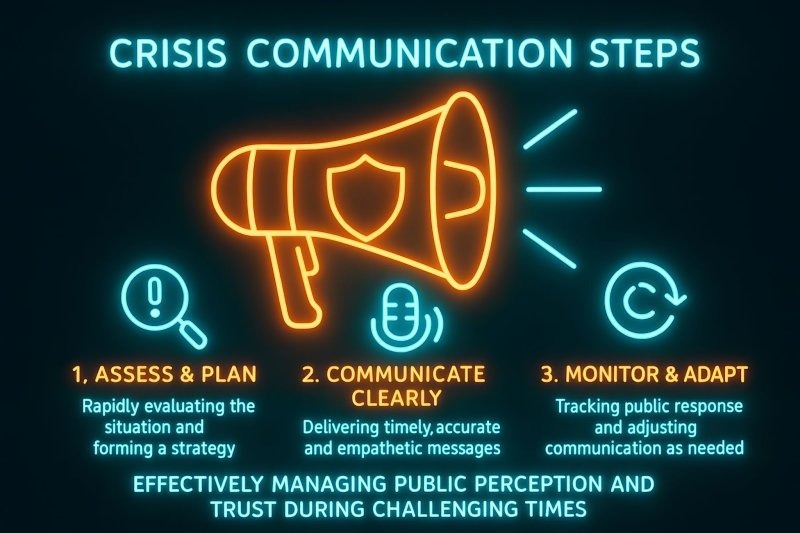
How to Respond When a Crisis Hits
Even with preparation, the real test begins when a crisis hits. Here’s a step-by-step approach to effective PR crisis management:
Step 1: Confirm the Facts
Don’t jump into public statements without understanding the full picture. Confirm what happened, who is affected, and what’s at risk.
Step 2: Activate Your Team
Bring together your crisis management team immediately. Assign responsibilities, approve messaging, and establish timelines.
Step 3: Monitor the Situation
Use media monitoring tools and real-time alerts to track public sentiment, media coverage, and misinformation. TVEyes is the trusted source of audio and video media intelligence for thousands of global organizations, powering strategic decisions through real-time monitoring, speech-to-text technology, and a vast capture network.
Step 4: Communicate Quickly and Transparently
Issue a holding statement if needed. Share what you know, what you’re doing, and when to expect updates. Be honest—don’t speculate or mislead.
Step 5: Update Stakeholders
Keep employees, partners, customers, and investors informed with timely updates. Use clear, consistent language.
Step 6: Engage with the Public
Respond to concerns on social media, in the press, and via your owned channels. Don’t hide—audiences expect transparency and accessibility.
Step 7: Take Accountability
If the brand made a mistake, own it. Apologize sincerely, outline corrective actions, and commit to change.
Step 8: Debrief and Improve
After the situation stabilizes, conduct a full review. Document the timeline, decisions made, outcomes, and lessons learned.
Real-World Crisis Management Examples
Many major brands have faced high-profile crises—and their responses made all the difference.
Crisis Management Case Study: Samsung Galaxy Note 7 Recall (2016)
In 2016, Samsung faced a major brand crisis when its Galaxy Note 7 smartphones began catching fire due to battery defects. Initially, the company issued a limited recall and tried replacing the devices. However, when replacement units also began overheating, the crisis intensified.
Samsung responded by issuing a global recall of the Note 7 and permanently discontinuing the model. The company faced billions in losses, significant media scrutiny, and damage to its reputation.
What helped Samsung begin to recover was its comprehensive crisis management plan and its focus on transparency and accountability. The company:
- Issued a public apology
- Conducted an extensive investigation
- Released a detailed report on the battery issues
- Implemented an 8-point battery safety check for all future devices
- Rolled out a full crisis communications plan with regular updates to the public and press
While the incident hurt the brand in the short term, Samsung’s swift action and transparent response helped rebuild trust over time. It became a textbook case for PR crisis management done right after an initial misstep.
Other Real World Examples
- Tylenol (1982): Johnson & Johnson’s fast recall and open communication during the cyanide poisoning crisis became a gold standard in crisis communications.
- United Airlines (2017): The dragging incident drew global backlash. Poor initial messaging worsened the situation. A faster, more empathetic response could have reduced the damage.
- Equifax (2017): A slow and opaque response to a data breach impacted 147 million people. The lack of a strong crisis management plan magnified public outrage.
These cases show how both good and bad crisis management strategies can shape the future of a brand.
The Bottom Line
Crisis management is a vital part of modern brand management. It’s not just about putting out fires; it’s about preparing your team, protecting your brand, and preserving trust when challenges arise.
Let’s recap the essentials of strong crisis management in public relations:
- Understand the types of crises your brand may face
- Develop a thorough crisis management plan
- Define clear roles and responsibilities
- Build a solid crisis communications plan
- Train your crisis management teams for fast, coordinated action
- Monitor media with real-time alerts
- Respond with empathy, transparency, and accountability
- Learn and evolve from every crisis situation
In a world where every brand is just one headline away from crisis, being prepared isn’t just smart, it’s essential.